

How often should rhIL - 11 injection vial be administered?
Recombinant human interleukin - 11 (rhIL - 11) injection vials are a crucial therapeutic agent in the medical field, particularly in the management of certain hematological conditions. As a supplier of rhIL - 11 injection vials, understanding the appropriate administration frequency is of utmost importance for both medical professionals and patients. This blog aims to delve into the factors influencing the administration frequency of rhIL - 11 injection vials and provide evidence - based guidance.

Physiological Mechanism of rhIL - 11
Before discussing the administration frequency, it is essential to understand how rhIL - 11 works in the body. rhIL - 11 is a thrombopoietic growth factor that stimulates the proliferation of hematopoietic stem cells and megakaryocyte progenitor cells. It promotes the maturation and differentiation of megakaryocytes, leading to an increase in platelet production. Platelets play a vital role in hemostasis, and a decrease in platelet count (thrombocytopenia) can lead to bleeding complications. By enhancing platelet production, rhIL - 11 helps to prevent or treat thrombocytopenia, especially in patients undergoing chemotherapy or radiotherapy.
Factors Affecting Administration Frequency
Patient's Medical Condition
The underlying medical condition of the patient is a primary factor in determining the administration frequency of rhIL - 11 injection vials. For patients with severe thrombocytopenia due to intensive chemotherapy regimens, more frequent administration may be required. For example, patients with acute myeloid leukemia (AML) who receive high - dose chemotherapy often experience significant drops in platelet counts. In such cases, rhIL - 11 may need to be administered daily to maintain an adequate platelet level.
On the other hand, patients with milder forms of thrombocytopenia or those with a slower - progressing disease may require less frequent administration. For instance, patients with chronic lymphocytic leukemia (CLL) who have a more stable platelet count may only need rhIL - 11 injections every few days.
Treatment Protocol
The specific treatment protocol, including the type and dosage of chemotherapy or radiotherapy, also influences the administration frequency. Different chemotherapy drugs have varying effects on platelet production. Some drugs are more myelosuppressive, causing a more profound and rapid decrease in platelet counts. In these cases, a more aggressive rhIL - 11 administration schedule may be necessary.
For example, a patient receiving a combination of highly myelosuppressive drugs such as cisplatin and doxorubicin may need rhIL - 11 injections starting from the day after chemotherapy and continuing daily until the platelet count recovers. In contrast, a patient on a less myelosuppressive chemotherapy regimen may only need rhIL - 11 every other day.
Patient's Response to Treatment
Monitoring the patient's response to rhIL - 11 treatment is crucial for adjusting the administration frequency. Regular platelet count measurements are used to assess the effectiveness of the treatment. If the platelet count increases rapidly and reaches a safe level, the administration frequency may be reduced. Conversely, if the platelet count fails to increase or continues to decline, the frequency may need to be increased or the dosage adjusted.
For example, if a patient's platelet count rises from 20,000/μL to 50,000/μL after three days of daily rhIL - 11 injections, the frequency may be reduced to every other day. However, if the platelet count remains below 20,000/μL after a week of daily injections, the doctor may consider increasing the dosage or changing the treatment approach.
General Administration Guidelines
Based on clinical studies and medical practice, the following general guidelines can be used for the administration frequency of rhIL - 11 injection vials:
Initial Treatment
In most cases, the initial treatment with rhIL - 11 is started when the platelet count drops below a certain threshold, usually 50,000/μL. The recommended starting dosage is typically 50 mcg/kg once daily, administered subcutaneously. This daily administration is continued until the platelet count reaches a safe level, usually above 100,000/μL.
Maintenance Treatment
After the platelet count has recovered, a maintenance treatment may be required to prevent a recurrence of thrombocytopenia. The maintenance administration frequency is usually lower than the initial treatment frequency. For example, rhIL - 11 may be administered every other day or two to three times a week, depending on the patient's condition and the stability of the platelet count.
Case Studies
Let's look at some real - world case studies to illustrate the application of these guidelines.
Case 1: A 45 - year - old male with AML
This patient received intensive chemotherapy with cytarabine and daunorubicin. His platelet count dropped to 15,000/μL on day 7 after chemotherapy. rhIL - 11 was started at a dosage of 50 mcg/kg once daily. After 5 days of treatment, the platelet count increased to 30,000/μL. The daily administration was continued, and by day 10, the platelet count reached 120,000/μL. The administration frequency was then reduced to every other day for a week as a maintenance treatment.
Case 2: A 60 - year - old female with CLL
This patient had a mild thrombocytopenia with a platelet count of 40,000/μL. She was started on rhIL - 11 at a dosage of 50 mcg/kg every other day. After two weeks of treatment, her platelet count increased to 80,000/μL. The frequency was maintained at every other day for another month to ensure the stability of the platelet count.
Other Related Oncology Injections
In the field of oncology, there are other important injections that are used in combination with or as alternatives to rhIL - 11. For example, Daratumumab (with Recombinant Human Hyaluronidase)injection, CAS No.: 945721 - 28 - 8 is used in the treatment of multiple myeloma. It targets a specific protein on the surface of myeloma cells, leading to their destruction.
Fosaprepitant Dimeglumine Injection, CAS No.: 265121 - 04 - 8, Bulk and Injection(vial)150mg/5ml is an anti - emetic drug used to prevent nausea and vomiting associated with chemotherapy. It works by blocking the action of substance P in the brain, which is involved in the emetic reflex.
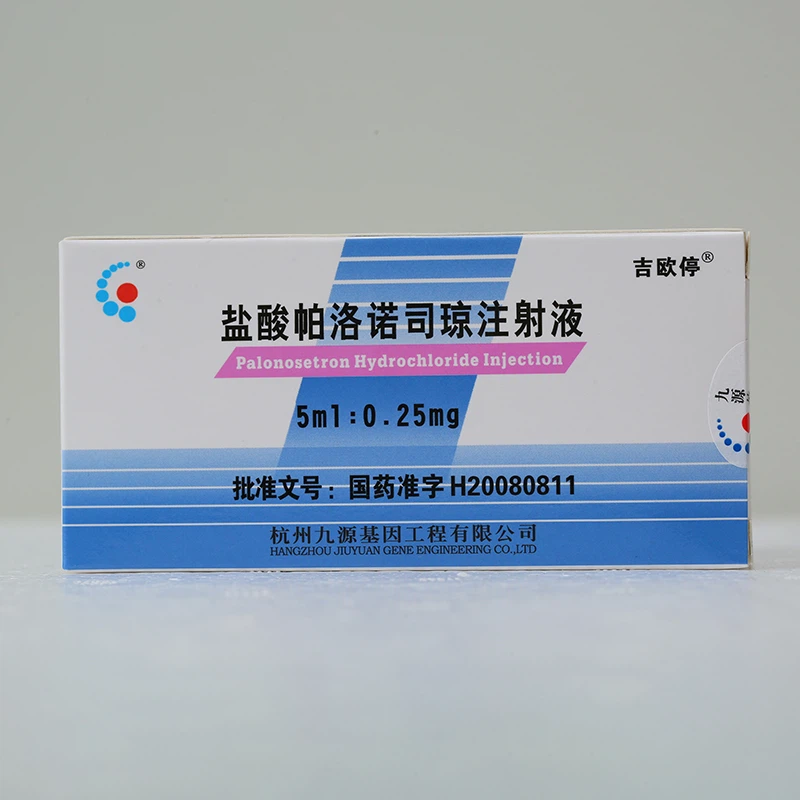
Palonosetron Hydrochloride Injection– Anti - emesis After Chemotherapy Or Radiotherapy, CAS No.: 135729 - 62 - 3, Palonosetron Hydrochloride Injection 0.25mg/5ml, 0.075mg/1.5ml is another anti - emetic agent that has a long - lasting effect. It is often used in patients undergoing highly emetogenic chemotherapy or radiotherapy.
Conclusion
The administration frequency of rhIL - 11 injection vials is a complex decision that depends on multiple factors, including the patient's medical condition, treatment protocol, and response to treatment. By following evidence - based guidelines and closely monitoring the patient's platelet count, medical professionals can optimize the use of rhIL - 11 to prevent and treat thrombocytopenia effectively.
As a supplier of rhIL - 11 injection vials, we are committed to providing high - quality products and supporting medical professionals in making informed decisions about the administration of our products. If you are interested in purchasing rhIL - 11 injection vials or have any questions about their use, please feel free to contact us for further discussion and negotiation.
References
- Basser RL, Holly RD, Miyo N, et al. Effects of recombinant human interleukin - 11 on platelet recovery after chemotherapy for advanced cancer. Blood. 1996;88(11):4313 - 4320.
- Vadhan - Raj S, Morales VM, Samoszuk M, et al. Randomized, double - blind, placebo - controlled, multicenter study of recombinant human interleukin - 11 in cancer patients with severe thrombocytopenia due to chemotherapy. J Clin Oncol. 1997;15(1):336 - 343.
- George JN, Raskob GE, Shah SR, et al. Idiopathic thrombocytopenic purpura. N Engl J Med. 1996;335(16):1207 - 1211.