


Finished Dosage Form
A Finished Dosage Form (FDF) refers to the final product of a pharmaceutical manufacturing process that is ready for administration to the patient. Finished Dosage Form means the form of a drug that is, or is intended to be, dispensed or administered to humans or animals and requires no further manufacturing or processing other than packaging, reconstituting, or labeling.
Why Choose Us?
Rich Experience
Hangzhou Jiuyuan Gene Engineering Co., Ltd. is a modern biopharmaceutical company, specialized in R&D, manufacture and sales of gene engineering, biochemical, chemical drugs and medical device.
Professional Technical Team
Jiuyuan Marketing cultivates a professional, dedicated and enterprising pharmaceutical service team, establishes a stable, credible and efficient pharmaceutical service network, and focuses on timely delivery of high-quality pharmaceutical products which are the crystallization of scientific research, quality control and production.
Wide Product Range
The company has actively propelled the progress of biopharmaceutical industrialization, gradually developed a series of products including JILIFEN, JIPAILIN, JIJUFEN, YINUOJIA, JIOUTING and GUYOUDAO and so on.
Wide Market
Marketing network spreads over the country more than 30 provinces and cities. The industrial map continues to extend, and the company's products export to Asia, South America, Europe, Africa and many other countries.
-
RhBMP-2 (Recombinant Human Bone Morphogenetic Protein-2) – A New Bone Repair Material, Registered As An Implanted Medical Device, Tablet (vial): 1mg/vial
Chemical Name: Recombinant Human Bone Morphogenetic Protein-2. A new type bone repairing material which has biological activity..
-
Enoxaparin Sodium Injection– Anticoagulant and Antithrombotic, CAS No.: 679809-58-6 0.2ml:2000AxaIU(20mg), 0.4ml:4000AxaIU(40mg), 0.6ml:6000AxaIU(60mg), 0.8ml:8000AxaIU(80mg), 10ml:100,000AxaIU(1g)
● The only LWMH is recommended by ACC, ESC and CSC to cure UA and NSTEMI.. ● The only LWMH is approved to cure STEMI.. ● The only enoxaparin sodium which complies with EP 8.0 standard, and has EU and
-
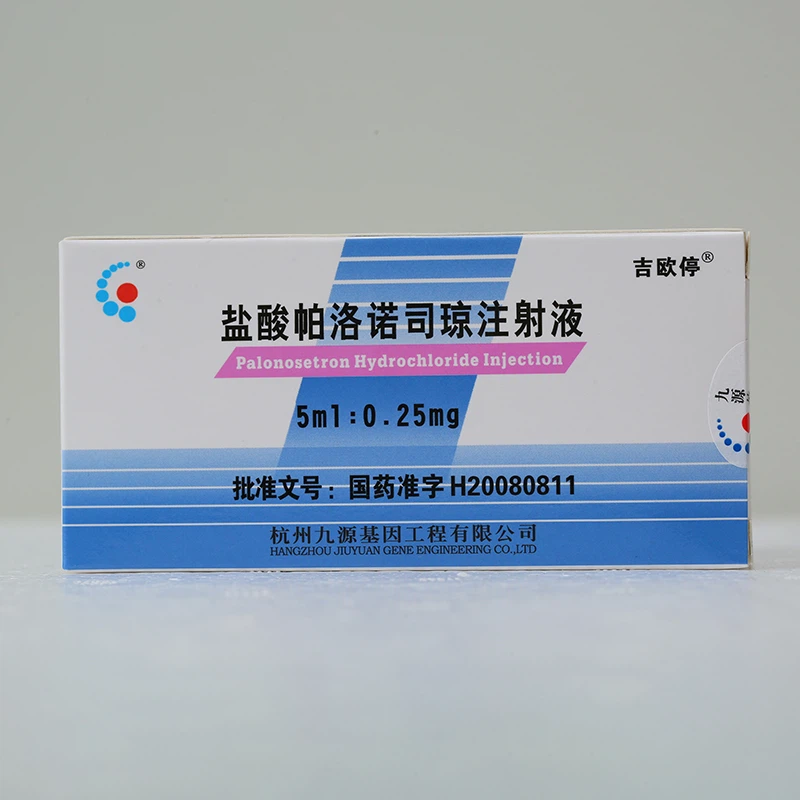
Palonosetron Hydrochloride Injection– Anti-emesis After Chemotherapy Or Radiotherapy, CAS No.: 135729-62-3, Palonosetron Hydrochloride Injection 0.25mg/5ml, 0.075mg/1.5ml
Generic Name: Palonosetron Hydrochloride injection. The quality and efficacy consistency of generic drugs were evaluated.. The second generation 5-HT3 receptor antagonist, super antagonistic, long -
-
RhIL-11 Injection(Oprelvekin), CAS No.: 145941-26-0, (Recombinant Human Interleukin-11) – A Drug To Increase Platelet Count, RhIL-11 Injection Lyophilized Powder (vial): 0.75mg/vial, 1.5mg/vial, 3mg/vial
Generic Name: Oprelvekin. Trade Name: JIJUFEN. Chemical Name: Human Interleukin-11 for Injection. The only drug approved by FDA for prevention and treatment of Chemoradiotherapy-induced
-
RhG-CSF Injection(Filgrastim) (Recombinant Human Granulocyte Colony-Stimulating Factor) – A Drug To Increase White Blood Cell Count, CAS No.: 121181-53-1
Generic Name: Filgrastim. Trade Name: JILIFEN. Chemical Name: Human Granulocyte-Colony Stimulating Factor (hG-CSF) Injection.
-
Fulvestrant– An Anti-cancer Drug ,CAS No.: 129453-61-8
Fulvestrant is a prescription medicine used to treat advanced breast cancer or breast cancer that has spread to other parts of the body (metastatic).
-
Daratumumab (with Recombinant Human Hyaluronidase)injection, CAS No.: 945721-28-8
Name: Daratumumab (with recombinant human hyaluronidase). CD38 inhibitor with recombinant human hyaluronidase. INDICATIONS: Multiple myeloma
-
SIRPα- Specific Monoclonal Antibody
Name: SIRPα. - Specific monoclonal antibody. INDICATIONS: Solid tumors
-
Romosozumab Injection - Osteoporosis, CAS: 909395-70-6
Name: Romosozumab injection . Sclerostin inhibitor. INDICATIONS: Osteoporosis
-
Amylin Analog , CAS No.: 138398-61-5
Name: Amylin analog. Peptide . Indication: Obesity and overweight
-
Semaglutide Intermediate (Totally 29 Amino Acids), CAS No.: 910463-68-2
Name: Semaglutide intermediate. Totally 29 amino acids . Sequence: EGTFTSDVSSYLEGQAAKEFIAWLVRGRG
-
Liraglutide Injection (recombinant Route), Diabetes Bulk and Pen 3ml:18mg CAS No.: 204656-20-2
Liraglutide is a prescription medicine used to treat the symptoms of Type 2 Diabetes Mellitus. Liraglutide may be used alone or with other medications.




Advantages of Finished Dosage Form
Convenience and Patient Compliance
Opting for finished dosage form forms offers a multitude of benefits for pharmaceutical companies looking to balance efficiency and cost-effectiveness. finished dosage forms, such as tablets and capsules, allow for improved patient compliance as they offer convenient administration, allowing patients to take their medication without the need for healthcare professional involvement. This convenience leads to more effective treatment outcomes and improved patient satisfaction.
Accurate Dosing and Uniform Drug Content
Finished dosage forms allow for precise dosing, and ensure the accurate delivery of the prescribed amount of medication. They provide uniform drug content, minimizing variations in dosage and enhancing consistency in drug administration.
Stability and Shelf Life
Another advantage of finished dosage forms is their extended shelf life and stability. Compared to liquid or semisolid formulations, finished dosage forms are generally more stable and have a longer shelf life. They can retain potency over time and are less susceptible to degradation or contamination when stored correctly. This stability ensures that the medication remains effective throughout its intended shelf life, making OSD a reliable solution for pharmaceutical companies looking to meet the demands of global supply chains while maintaining product quality and ensuring patient safety.
Clinical Development and Control Processes
Choosing finished dosage forms also offers competitive advantages to pharmaceutical companies in terms of clinical development, production cost, and control processes. finished dosage forms allow for easier clinical development as they are simple to manufacture and can be easily scaled up. Moreover, finished dosage forms can be produced at a lower cost than other drug formulation types, as they require less equipment and fewer processing steps. Additionally, finished dosage forms offer better control processes, as they can be easily analyzed and tested to ensure product specifications are met, leading to more consistent and reliable product quality.
Market Trends & Drivers of Finished Dosage Form
The manufacture of finished dosage forms continues to evolve, with key drivers including functional improvements, safety and overall cost of development and commercial manufacture.
As plant network strategies evolve and new products progress there has been more alignment between development and commercial for manufacturing process streamlining and improved quality. While wet granulation remains required and preferred in some situations, this has resulted in more emphasis on direct blend and dry granulation processing for tablets and capsule manufacturing. This in turn has put more emphasis on raw material and process control.
From a regulatory perspective, Quality by Design (QbD) and Process Analytical Technology (PAT) principles are increasingly being sought, and beyond this continuous manufacturing, particularly for finished dosage forms, has emerged as one of the rising star technologies.
The major trend towards continuous processing where multiple continuous unit operations are coupled into an integrated system has occurred using joint industry, academia and process equipment supplier collaborations; and the genre includes the primary processes in oral finished dosage form manufacture direct blend, dry and wet granulation, tableting/encapsulation and tablet film coating. Drivers include streamlined development, lower and more flexible manufacturing, higher quality product and lower net costs.
Life cycle management strategies such as fixed dose combinations, extended release and pediatric forms continue to increase in demand. Combining new chemical entities with an existing drug to explore new clinical benefits and newer indications is on the rise. New chemical entities coming out of discovery continue to have poor solubility and bioavailability challenges, and the industry continues to invest in ways and means to deliver the drug with a better clinical outcome. Contract developers continue to support the industry in solving these challenges.
Increasingly the finished dosage formsector, which traditionally focused on development and manufacture, is overlapping with other sectors involved in electronic data transfer and management and supply chain logistics as they look for areas of expansion in non-traditional sectors, particularly as the sector looks for a more efficient and integrated supply chain. Indeed, the longer term trend is towards integration throughout the supply chain with companies offering API manufacture all the way through to finished drug manufacture and packaging. As a result, much of the expertise that is traditionally in pharma is now residing within the finished dosage form sector and this is undoubtedly changing the relationship between client and customer with even risk sharing models becoming more common.
Comparison Between API and Finished Dosage Form


A finished dosage form (FDF) describes the consumable, finalized drug product - tablets, pills, liquid solutions, and other forms of FDFs all come under this category. However, all FDFs include an API along with other inactive components.
The two main parts of any pharmaceutical product are the active pharmaceutical ingredient (API) and the excipient (additional chemicals used to aid in the drug's delivery). Chemically inert fillers like lactose or cellulose derivatives would be some examples of the excipients
To put simply, APIs form the crux of the finished dosage form - the main ingredient that’s meant to meet the objectives of the prescription.
Each drug's (API) strength is measured against industry standards during production. However, there might be significant variations in quality across different manufacturers. The testing procedures used by each manufacturer can cause substantial variations in product efficacy.
The FDA requires manufacturers to demonstrate their medications' efficacy in laboratory settings and clinical trials involving actual patients.
APIs are often manufactured in the home countries of pharmaceutical corporations. However, in recent years, many businesses have elected to outsource production to countries with lower labor costs. Because of this, stricter criteria and inspections have been implemented to regulate these medications.
Although numerous pharmaceutical businesses can be found in the United States and the United Kingdom, most API manufacturers are located outside these countries. The most populous ones can be found in Asia, especially in China and India.
In order to save money on resources like staff and building maintenance, an increasing number of businesses are outsourcing. Despite the positive impact on their bottom line, there remains persistent worry about the quality of APIs in foreign countries.
The efficacy (achieving the desired effect) and the safety of drugs are significantly impacted by the quality of their active pharmaceutical ingredients. Substandard or degraded APIs have been linked to major health problems and fatalities.
APIs are still subject to the country of destination's strict regulations and oversight, even in the case of outsourcing. For instance, the U.S. Food and Drug Administration still inspects foreign API factories.
The development of APIs indicates the dynamic nature of the pharmaceutical sector. Today, pharmaceutical manufacturing is a more decentralized process. Before, the API, capsule, and packaging were all made and distributed by the same company.
The regulatory agencies charged with ensuring the public's safety have responded by instituting stringent checks on all pharmaceuticals. A violation of these defined rules may result in fines or a highly costly recall for the pharmaceutical firms backing these businesses.
According to a recent industry study, injectable Finished Dosage Forms are expected to dominate the market from 2020 to 2027, where APIs accounted for the greatest market share in 2020. Growth in this sector is anticipated to be propelled by factors like the growing demand for innovative and generic medicine formulations.
Revenue from generic API manufacturing was the largest in 2020 and is projected to increase as patents on branded medications expire, and generic drugs become more affordable.
Questions & Considerations When Choosing Finished Dosage Form as your Drug Formulation Type
The properties of the API play a significant role in determining the feasibility of creating a finished dosage form form. Some chemical entities are more challenging to formulate into tablets or capsules, as they may be sensitive to heat or moisture. Therefore, it is important to work with a qualified pharmaceutical expert who can assess the API and determine the best approach for creating finished dosage form form.
The desired release profile: Immediate-release dosage forms rapidly release the API into the bloodstream, while sustained-release and controlled-release formulations release the drug over a more extended period. The desired release profile will depend on the therapeutic goals of the drug. It is essential to ensure that the finished dosage form drug formulation meets the desired release profile and undergoes a rigorous validation process before being released to the market.
The patient's needs: Some patients may have difficulty swallowing tablets or capsules, and in such cases, alternative finished dosage form forms, such as chewable tablets or liquid suspensions, may be more appropriate. Therefore, it is essential to consider the patient's preferences and requirements when selecting the finished dosage form formulation type.
Continuous manufacturing is a modern approach that integrates individual batch unit operations into a single continuous process, making finished dosage form production more efficient and cost-effective. Tablet testing is also an essential step in ensuring that the finished dosage form drug formulation meets the required quality standards.
Objectives of Finished Dosage Form Quality Assurance
Ensure Product Quality & Safety
A finished dosage form company's primary goal is to make medication that works. However, if a sound finished dosage form quality assurance system is not in place, the finished dosage form products that are intended to save lives can instead cause irreversible harm or even death. The finished dosage form industry, and every employee involved in finished dosage form quality assurance, should always maintain focus on the people taking the medications and the potential impact on their health.
Avoid Negative Publicity
A robust finished dosage form quality assurance system ensures that products are effective and safe. Following good manufacturing practices (GMP) and enacting comprehensive inspection policies help drug manufacturers produce the highest quality products and avoid reputation-damaging incidents. Pharma quality assurance protects against negative publicity.
Improve Efficiency
Finished dosage form quality assurance is primarily about producing reliable and safe products. The second aspect of pharma quality assurance is that it promotes continuous improvement, from technology transfer to product development. Advanced technologies allow for tighter controls and closer monitoring of the finished dosage form manufacturing process. Automation and virtual processes increase productivity and safety, but product quality must never be compromised.
Guarantee Compliance
Regulations are constantly changing, so keeping up-to-date with pharma industry standards requires an effective finished dosage form quality assurance system that includes solid processes and risk management procedures to address regulatory compliance. Many compliance issues that the finished dosage form industry faces are not due to intentional wrongdoing. Instead, these costly errors can most often be attributed to poor workflows, human error or sloppy record-keeping.

Strict quality control is required to meet these objectives, including:
● Employee training
● Continuous improvement of quality management systems
● Minimizing or eliminating deviation
● Documentation
● Internal audits
● Management reviews
Does the Formulation of Finished Dosage Forms Affect Acceptance and Adherence in Older Patients?
Texture, mouthfeel, and coating
Surface texture was the second most commonly reported cause (relating to the dosage form) of swallowing difficulties in people with dysphagia, with 70.5% of participants identifying a problem with this feature. Surface characteristics further contributed to 18.5% of use difficulties in older people. Participants used the term “chalky” to describe the texture of tablets that were difficult to take. “Chalkiness” was also a variable that was directly measured to assess the acceptability of chewable formulations using the visual analog scale, and the results indicate an overall preference toward “not chalky at all” chewable formulations.
Taste
Taste was significant in predicting the acceptability of an alendronic acid tablet formulation using the Medicine Acceptability Questionnaire. Some active pharmaceutical ingredients, such as ferrous fumarate, have an inherently bitter taste and require taste masking with food. The need for taste masking increased when medications were crushed; various substances such as milk, apple juice, bread, tea, and fruit smoothies were used to mask the “horrible” taste. Further studies found that in 19% (205) of 1079 evaluations, older people used food or drink just before or after administration to mask the taste or to improve ease of swallowing.
Appearance
Difficulties distinguishing between different strengths because of similarities in appearance led to discomfort and clinical deterioration, although sometimes additional markings such as embossments could help patients differentiate tablets. Smaller tablets, including mini tablets, were difficult to see, especially for older people with visual impairments. Conversely, large tablets can lead to a psychological block and anxiety before taking medication. The type of dosage affected older people's views on appearance. Concerns were raised in relation to the appearance of granules, which were considered the least acceptable “alternative dosage form” alongside chewable tablets in older people. Furthermore, when comparing tablet and liquid formulations of alendronic acid, there was a general trend for the liquid to perform better in terms of appearance, although this difference was not statistically significant.
Our Factory
Hangzhou Jiuyuan Gene Engineering Co., Ltd. is a modern biopharmaceutical company, specialized in R&D, manufacture and sales of gene engineering, biochemical, chemical drugs and medical device. The company was founded in December 1993 as a member of Huadong Medicine Group, and became one of the earliest gene engineering pharmaceutical enterprises in Zhejiang province as well as in China. The company always upholds the concept "Taking gene engineering as orientation, Rendering service to human health", to pursue innovation and to strive for excellence.

Our Certifications
National New High-tech Enterprise
Key New High-tech Enterprise of National Torch Plan
National superior enterprise of intellectual property
Provincial New High-tech Research & Development Center
Zhejiang Provincial Enterprise Technology Center
Zhejiang Famous Trademark
Zhejiang Jiuyuan Gene Engineering Biopharmaceutical Research Institute
Zhejiang province per mu benefit leading enterprises
Gene-engineering New Drug R&D Technology and Service Sub-platform
Provincial Post-doctoral Scientific Research Working Center
Excellent industrial products in Zhejiang Province
Hangzhou Academician Expert Working Center
Hangzhou Top Ten New High-tech Enterprise
Zhejiang Green Enterprise


Ultimate FAQ Guide to Finished Dosage Form
Q: What is the basic knowledge of finished dosage form?
Q: What are the 5 forces of the finished dosage form industry?
Q: What are the basic of finished dosage form?
Q: What are the three pillars of the finished dosage form industry?
Q: Which country is the largest producer of finished dosage forms?
Q: What causes finished dosage form waste?
Q: How to grow in the finished dosage form industry?
Develop your skills.
Gain experience through internships.
Update your resume.
Apply for jobs.
Pursue higher studies.
Q: How do you treat finished dosage form waste?
Q: What is the difference between an active pharmaceutical ingredient (API) and finished dosage form?
Q: What are the key steps in the development of finished dosage form?
Q: How do finished dosage forms differ based on the route of administration?
Q: What is the role of excipients in finished dosage form?
Q: How are the quality attributes of finished dosage form determined?
Q: What is the importance of stability testing for finished dosage forms?
Q: How does the manufacturing process impact the quality of finished dosage form?
Q: What are the regulatory requirements for the development and approval of finished dosage forms?
Q: How do finished dosage forms differ from pharmaceutical drug products?
Q: What are some common challenges in the scale-up of finished dosage form manufacturing?
We're well-known as one of the leading finished dosage form manufacturers and suppliers in China. We warmly welcome you to wholesale bulk high quality finished dosage form at competitive price from our factory. Good service and punctual delivery are available.
